Sunday, February 20, 2011

#6 Single-Storey Shophouses, 601-639 Balestier Road


Along the route of our trail, we passed by many single-storey shophouses. These could be found in many parts of pre-1965 Singapore, especially in the suburban and rural areas, serving the population with its utilitarian yet elegant form. However, it is rare to find them nowadays and only a handful remains, mostly in Balestier, as most have made way for more modern creations that makes more efficient use of scarce land in Singapore. These were built by early developers for sale as shops and homes for new settlers moving outwards from the city area to the rural areas.

These terrace houses show the earliest forms of buildings to be constructed in the rural areas. Though simple, the designs in the form of Art Deco pediment above the five-foot way beautified it, giving it an elegant touch, setting it apart from its simplistic design.

The Ngee Ann Kongsi owns the entire stretch of shophouses from 601 to 639 Balestier Road. It is a foundation founded in 1845 to look after the welfare of Teochew immigrants in Singapore, by funding education and other charitable projects using the income generated from its business ventures and rental of properties.

One striking feature must be the numerous Tau Sar Piah shops along this whole stretch. This boom started from the success of the original Tau Sar Piah shop, Loong Fatt Confectionery, at 369 Balestier Road, owned by Mr. Lee. In fact, Balestier is famour for its Tau Sar Piah, among some other things like lightings and the ducks.

To be honest, I have never noticed the uniqueness of these single-storey shophouses. To me, they are just like other buildings. After doing research and going on the trail, however, I have only just realised the significance of these shophouses. I believe there are many other hidden gems which we take for granted scattered around other parts of Singapore.

-Jocelyn

#7 Sun Yat Sen Nanyang Memorial Hall, 12 Tai Gin Road


Sun Yat Sen Nanyang Memorial Hall (SYSNMH) is a national monument which was built in the 1880s. It was formerly known as Sun Yat Sen Villa and is also now known as Wan Qing Yuan (晚晴园).

In the 1880s, Sun Yat Sen Nanyang Memorial Hall was reportedly to have been built by a wealthy Cantonese businessman Boey Chuan Poh for his mistress, naming it ‘Bin Chan House’ (Mingzhenlu) after her. Interestingly, the bungalow he bought occupied a site that was also part of a sugar plantation owned by John Balestier, the first American consul appointed to Singapore in 1837. However, it was later sold to Teo Eng Hock in 1905, who was a Straits-born Teochew rubber magnate. Teo intended for his aged mother to spend her sunset years at the bungalow, and thus aptly renamed it Wan Qing Yuan which meant Serene Sunset Garden/Villa.

In support of China’s republican revolutionary movement, he offered the leader, Dr Sun Yat Sen, the bungalow, to be used as the headquarters of Dr Sun’s Chinese Revolutionary Alliance in Southeast Asia. Dr Sun briefly stayed at this house while touring Asia to garner support for the cause, using the villa as a base to plan the overthrow of the 267-year old Machu Qing dynasty which eventually led to the creation of the first Chinese Republic. The bungalow was also where the Tong Meng Hui Nanyang Branch was founded and made as its Southeast Asian quarters. Subsequently, the bungalow became known as the Sun Yat Sen Villa.

In 1942, during World War II, the Japanese used the villa as a communication centre and in 1945, it became the headquarters of the Singapore Branch of the Kuomintang. In 1951, after the end of Kuomintang activities in Singapore, the villa was handed over to the Singapore Chinese Chamber of Commerce and Industry to manage. Sun Yat Sen Nanyang Memorial Hall was restored in 1965, and turned into a Library and Museum. In 1966, on the centenary of Dr Sun's birthday, the villa was opened to the public. In 1999, Sun Yat Sen Nanyang Memorial Hall was closed for refurbishment. A fully restored and enlarged villa, complete with a memorial hall detailing the life of Dr Sun Yat Sen, re-opened in November 2001 on the 135th anniversary of the famed revolutionary's birth.

Sun Yat Sen Nanyang Memorial Hall is a beautiful two-storey Victorian villa with open verandahs at the front and sides. In front of the building, in the centre of the garden, is a seated statue of Sun Yat Sen, the leader of China's nationalist movement, measuring 3.5 metres tall and weighing 16000 kilograms. It is now a museum which displays items pertaining to Dr Sun’s life and work. A magnificent 60m-long bronze relief depicting the defining moments in Singapore's history runs the length of one wall in the garden.

A heritage institution under the National Heritage Board, Sun Yat Sen Nanyang Memorial Hall reflects the role Singapore played in modern Chinese history by tracing Dr Sun’s revolutionary activities in the Southeast Asian region, highlighting the impact of the 1911 Chinese Revolution on Singapore as well as Singapore’s contributions to the Revolution.

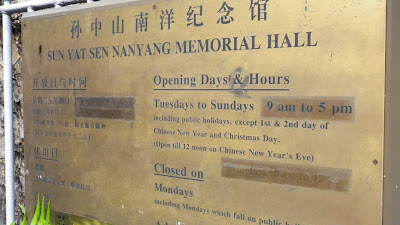
When our group was on site, it was disappointing that the Sun Yat Sen Nanyang Memorial Hall was closed for a major revamp and is only scheduled to re-open to the public in October 2011. The renovation works will focus mainly on the creation of new galleries, the development of new exhibits as well as landscaping works to the SYSNMH compound. Even though we could only take photos from outside the locked gates of the memorial hall, Carmen desperately wanted to break in to take photos! After all, there was no one and it sort of looks like a forsaken villa and there was no apparent renovation works.

Nevertheless, t’s heartening to know that our heritage is preserved even at an age when change is a constant.

Jiahui

#8 Maha Sasana Ramsi Burmese Buddhist Temple, 14 Tai Gin Road


Maha Sasana Ramsi Burmese Buddhist Temple was founded by U Kyaw Gaung in 1921. He was a Burmese practitioner of traditional medicine and brought a 10-tonne, 11-feet high marble sculpture of the Buddha to Singapore from Saygin Hill, a quarry north of Mandalay. The sculpture was then placed at the temple’s original location at 17 Kinta Road, just off Serangoon Road, only to be moved to its current location on Tai Gin road in 1990. It is the oldest Theravada institution and the only Burmese Buddhist temple of its kind in Singapore. . The temple houses the largest pure white marble statue of the Buddha outside of Myanmar, and has become a religious landmark for Burmese and Singaporean devotees to make merits and take part in merit sharing activities alike. At the Maha Sasana Ramsi Burmese Buddhist Temple at Tai Gin Road, the figurines of 'spirits' on the walls are called 'tha-djar-min' in Burmese. He is the King of celestial deities. He is also the Guardian of Buddha Sasana (meaning Buddha's teachings). The Lion figurines are called 'chin-thay'. Up till this day, descendants of U Kyaw Gaung still live in Singapore and continue to be the trustees of the temple.

During Buddhist holidays and Burmese festivals, the temple would see a large congregation of the Burmese community in Singapore. There is a fair and celebration in the temple during the Burmese New Year, Thingyan, which falls in the month of April each year. However, the unofficial “Little Burma” in Singapore lies in the civic district. The usual congregation place for the Burmese community is at Peninsula Plaza where there is a supermarket, shops selling Burmese products and even a restaurant with menu in the Burmese language.

There are some other roads in this area which are Burmese-themed. They are Akyab Road(named after a port in Burma) Bassein Road (named after a river town) Bhamo Road (named after a Burmese town) Irrawaddy Road (named after the Irrawaddy river) Mandalay Road (named after the royal capital of Myanmar from 1860 to 1885) Martaban Road (road was named in 1929 to continue the Burmese theme in the area) Pegu Road (named after a river town) Prome Road (named after one the oldest cities which was a commercial town and port in 1952) Rangoon Road (named after the administrative capital of British Burma). It is believed that the suggestion to name the road after Burmese towns and kingdoms came from an old and respected Burmese resident in the area. Others speculate that it could be because of the proximity to the Burmese temple’s original location at Kinta Road or even named after various British conquests in parts of Burma! This is because the British colonised Burma from 1824 to 1948.

Our group was in awe of the magnificent architecture of the temple. Just right at its doorstep, one would already be able to see the lights emanating from inside the temple. Its accessibility to the public has been enhanced with its shift from Kinta road to its current location. What’s more is that it is just a stone’s throw away from Sun Yat Sen Nanyang Memorial Hall, and that its visitors can always drop by this temple to pay a visit to the largest pure white marble statue of the Buddha outside of Myanmar. (:

Jiahui


I had no idea we had a burmese budhhist temple at balestier road. This Burmese temple was actually founded by U Kyaw Gaung in 1921 when he brought in from Mandalay a 10-tonne, 11 feet high marble scupture of teh Buddha. The temple was first located off Serangoon rd and was moved to this current location in 1990.

Actually I did not really find the temple interesting, what I found most interesting about this trip to Balestier was that quite a number of the sub-roads linking to Balestier was actually named after Burmese towns and kingdoms. Although it is not known what resulted in the roads having burmese names, we can only guess that its due to the rich burmese culture within the area. These roads were actually named in the early part of the 20th century and thus could not be due to the fact that the Burmese temple was nearly. It was more likely that the temple was moved into the area due to the Burmese road names rather than the other way round. Of course this is just a speculation (on my part).

-wenglun

Tau Hway Break!

Look how Daryl's face lit up when he knew we were going to have a break and some food!


Jia Hui is really enjoying her Tau Hway and Egg Tarts! Doesn't looking at how she eats make you want a bite of it too?

On the way to Jalan Ampas, we stopped by the Rochor Beancurd House for a well-deserved Tau Hway break after all the walking! Even during our break, we were learning the heritage of this famous Rochor Tau Hway.

The founder of the Rochor Beancurd house came from a very poor family and as such, could not afford education but had to start earning a living at a very young age. However, he was a very sharp kid and came up with the idea of a mobile Tau Hway stall. He started off selling his Tau Kway on a cart and would often put his younger siblings on it to help look after them while selling his beancurd. Soon, his Tau Hway became very famous and even up till today, Rochor Beancurd house remains a familiar name to almost every Singaporean.

However, you might also want to note that there are many different 'Rochor Tau Hway' around and not all may be the authentic. Our best advice? Let your tongue do the tasting and the distinguishing!

#9 Water Kiosk at Corner of Boon Teck Road


Seeing the water kiosk along Boon Teck Road was refreshing (pun intended) because it felt so out of place and distant in a place surrounded by shopping malls and coffee houses. The sheet metal containers and the simplicity of the stand were reminiscent of a time long gone, and the gesture of giving out something free was even more archaic.

The sign which, embarrassingly, I could not read, apparently reads "Charitable Service provided by Thong Teck Sian Tong Lian Sia". The temple, also situated along Boon Teck Street, used to provide water and tea for free to anyone who needed a drink. This gesture was made all the more significant because it was initiated in a time where drinking clean and safe water was a privilege, and not a right.


Sadly, by the time we reached the kiosk, the temple attendant had just come to lock up the kiosk and retrieve the metal containers. From what I understand from my research, one container would dispense water, while the other would dispense "Su Teh", which I believe is simply Teochew for tea. Personally, I wanted to try the water and tea in the containers, but I was pretty sure that I wouldn't like what was in either container. I actually felt quite relieved.


I guess, if you asked anyone what the relevance of the water kiosk is today, they'd simply point you in the direction of the nearest water cooler (even tap water has fallen out of favour). The water kiosk serves as a silent reminder of a time where life in Singapore was hard, and day-to-day living was a struggle. I'm sure the water in these containers would have tasted metallic or stale from being left out in the open all day. And the cups they provided were excellent bacteria and germ spreaders as well. But I like to think that none of this would have mattered because the goodwill of the temple allowed men and women who slogged all day, under the scorching sun, to quench their thirsts before carrying on their daily duties.

However, I feel that more could be done to promote the awareness of this water kiosk. It is a unique, one-of-a-kind landmark that has probably remained unnoticed and unused since Singapore became more affluent. I wonder how many days has a temple attendant carted back two full containers of water, and how they can overlook that and continue with their tradition of giving. The water kiosk's allure lies in the fact that it is so discreet that one hardly even notices it, even though it sticks out like a sore thumb in its surroundings. However, that, too, is why it will eventually fade into a backdrop of modernity.

- Daryl

#10 Sim Kwong Ho Shophouse (ii), 418 Balestier Road


The Sim Kwong Ho shophouses proved to be a point of intrigue for us while we were doing our trail. The architectural style of the shophouses definitely made it stand out from the other shophouses that we saw during our trail, but it was the intricate detailing on the shophouse doors that really raised some eyebrows. We knew that traditional carvings on the entrances to Chinese houses would be of "Door Gods", whose duty was to prevent evil spirits from crossing the threshold of the house. However, while the Sim Kwong Ho shophouses sported motifs of similar styling, they were not of "Door Gods" but rather, they depicted Sikh policemen from the colonial era of Singapore. This quickly became a point of interest for our group as we speculated why there was such a departure from traditional architecture. It was not until we found the site marker that we got our answers.


The shophouses here were built by Madam Sim Cheng Ho in 1928, and this particular row of shophouses were designed by architect Kwan Yow Luen. While Madam Sim employed different architects and designers for all her buildings, they all shared the same distinct style that was a fusion of eastern and western elements. This style was known as "Singapore Eclectic" or "Chinese Baroque". The Sikh policemen motifs were considered the "western" influence of the design style. These Sikh law enforcers were juxtaposed with traditional embellishments such as winged dragons, creating a clash in the aesthetics of the building that could be likened to Singapore's multi-cultural background.


I think, however, that it is only because we recognised the Sikh policemen that we took interest in the building designs. All of us in the group remembered drawings and photographs from our history textbooks of these policemen, and we recognised their turbans as well. But what of the younger generation, who might not realise the artistic nuance of the building because they are unsure what exactly they are looking at. They would just go past these "eclectic" shophouses without even noticing their unique design features.


It is sad to note that although these shophouses are being preserved as historical landmarks in Singapore, the tenants that occupy them do not reflect their cultural heritage. There were shops selling toilet and plumbing supplies, a budget hotel and interior design outlets. Even the corner coffeeshop had underwent renovation and lost its olden charm in the process. Hopefully, the next tenants would choose to model their shops after the architectural style of the shophouses.

The "unique-ness" of the Sim Kwong Ho shophouses made them one of the more interesting sights of our heritage trail. We stood at the traffic light junction and stared at the confusing array of different embellishments instead of crossing the road. I wonder if anyone else would do the same if they had just a bit more time at the traffic light.

- Daryl

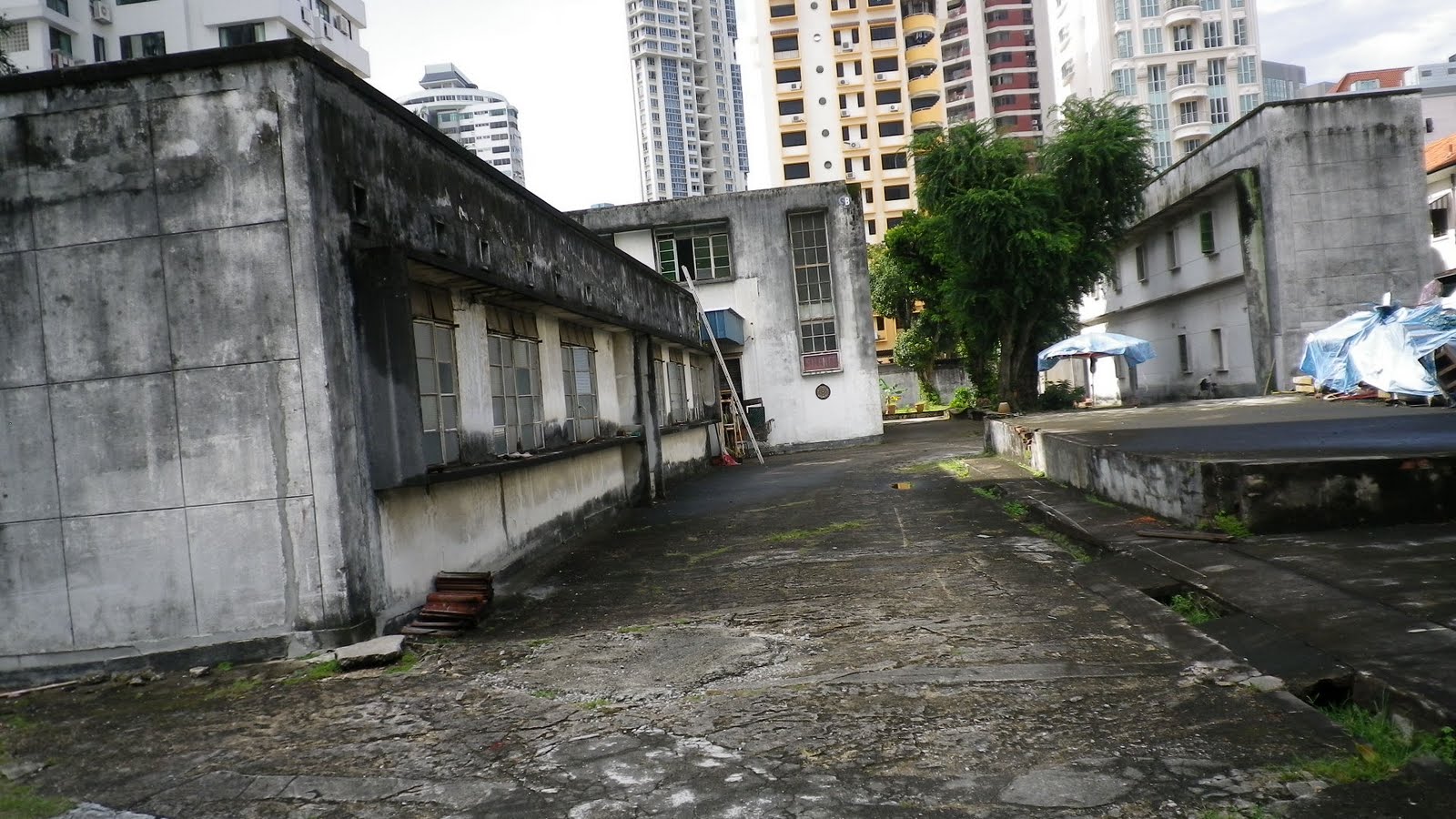
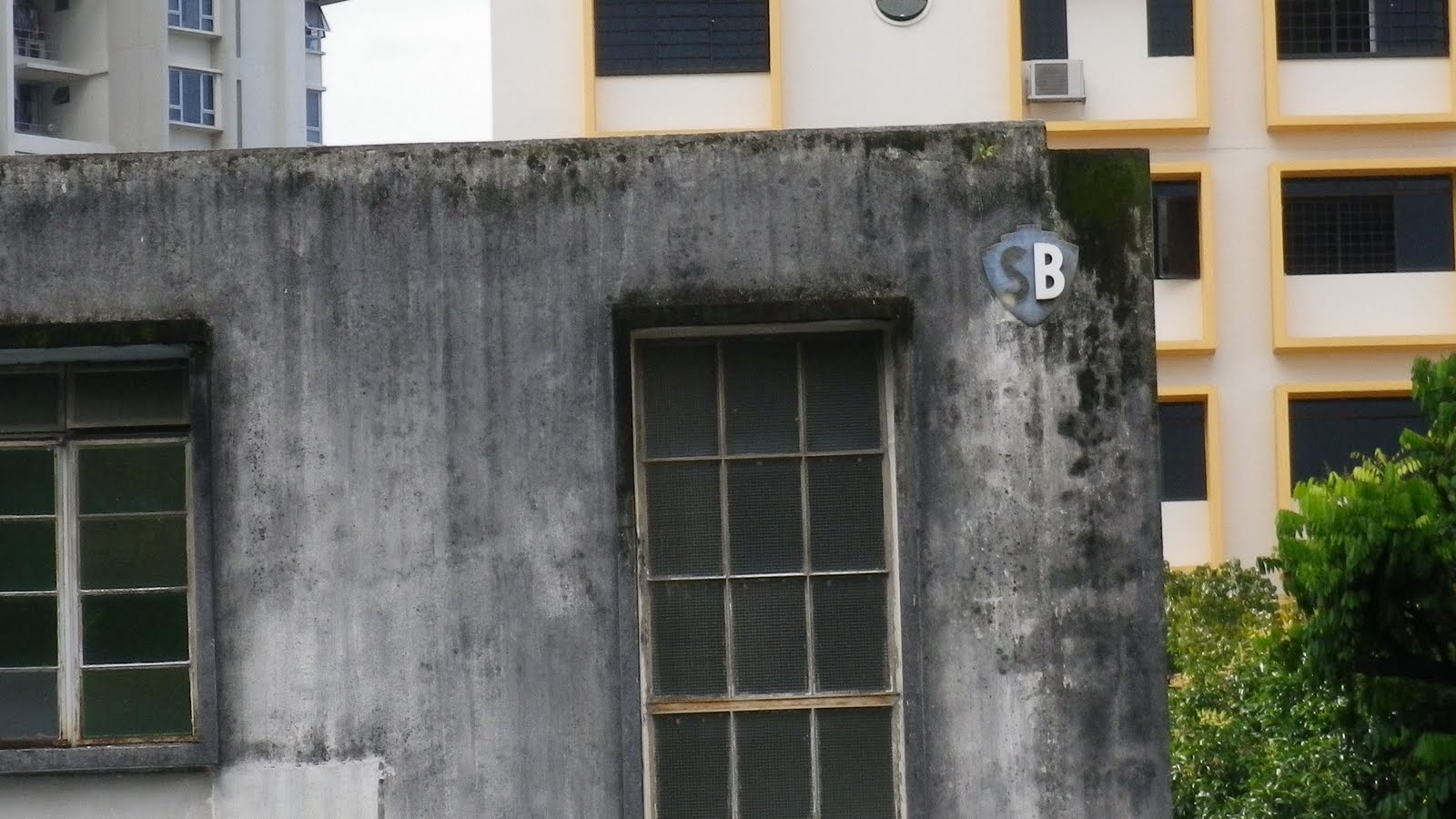
#11 Former Shaw's Malay Film Studies, 8 Jalan Ampas


yea. so this is the Jalan Ampas we have heard so much about last semester.
what was once a studio producing countless films has now become some dingy old buildings.
walking past, many would not have known the significance of it some 70 odd years ago.
the likes of P. Ramlee, a famous actor and director once graced its doors.

After the war, film production had picked up not only all over Asia but also in Singapore where both Chinese and Malay films were made. In 1947, 'Seruan Medeka', an effort by Film Melayu Art Productions, proved to be mildly successful. This prompted the Shaws to reopen their pre-war studio at No.8, Jalan Ampas to produce Malay movies. Under the banner of 'Malay Film Production Limited' (MFP), the Shaws aimed to dominate the Malay film market with quality productions. This move ushered in the period known as 'The Golden Age of Malay Cinema' during which over 300 films were produced. (Taken from Shaw Brother's website)

-wenglun